Match bag to patient: the three point verification at staging
Before any prescriptions hit the van, matching each delivery bag to the right patient is the front line defense against misdelivery. The risks are not minor: a wrong delivery can mean a delayed dose for one patient and a privacy breach for another. Three point verification, name, date of birth, and address, remains the industry standard for a reason. Each item packed for delivery should have its own label, and each must match the manifest and the patient profile.
At the staging table, the driver or technician checks every bag against the printed route sheet or the digital manifest. First, confirm the patient's name aloud, then check the date of birth from the label against the manifest. Finally, verify the address matches what is on the delivery sheet. This process is not a casual glance, each point is a deliberate pause. When possible, use a second set of eyes for high-volume runs or after any late packaging changes.
Special attention should go to families with similar names or multiple patients at one address. Color-coded bags or stickers can help prevent mix-ups when several deliveries are headed to the same complex or household. When pharmacy staff must substitute a medication or change a packaging type, update the manifest and double-check that the new information matches the bag, not just the prescription.
Keep reading: A 90-Day Med Sync Rollout at a Two-Pharmacist Store
Refrigerated items: packout, gel packs and the last tote loaded
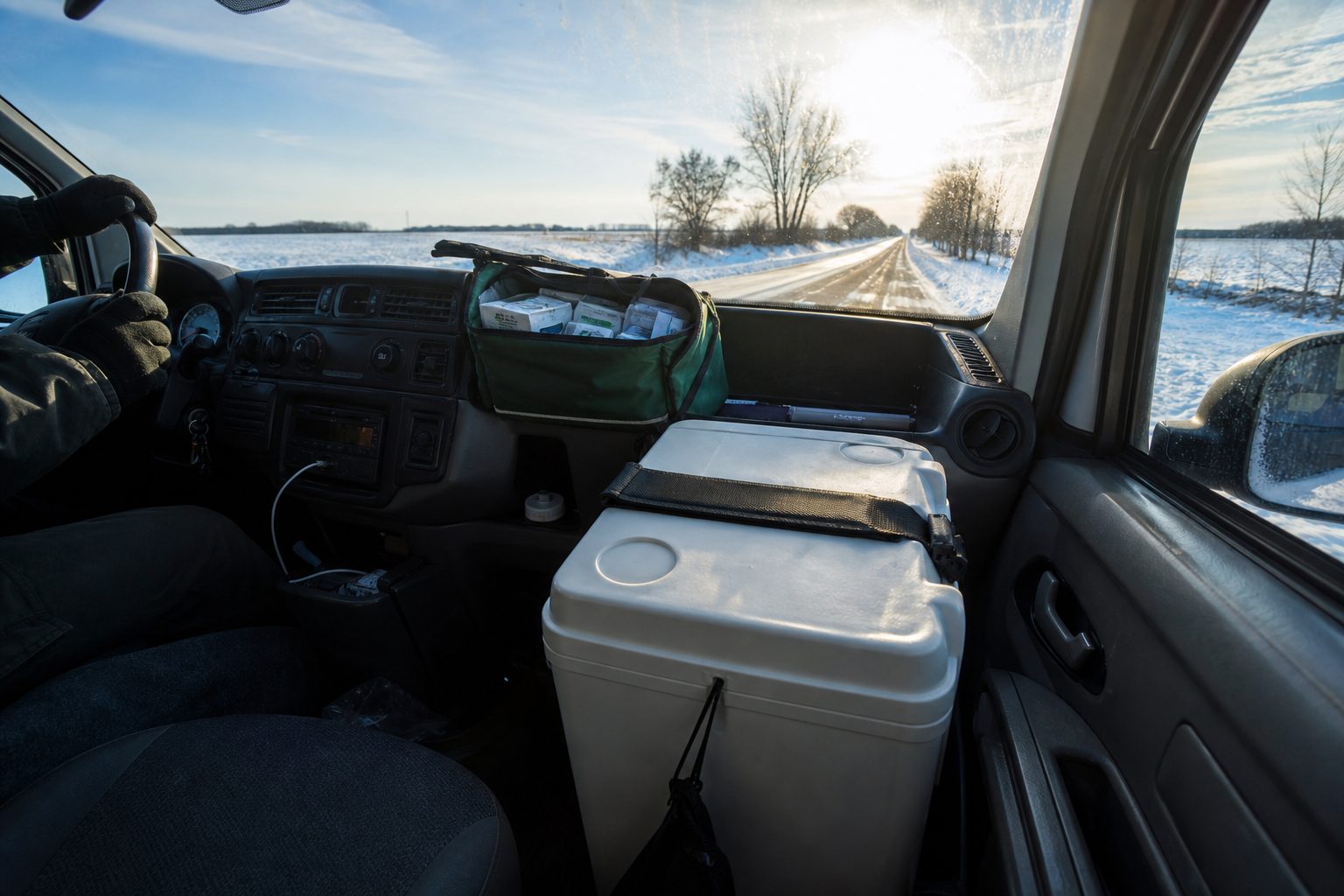
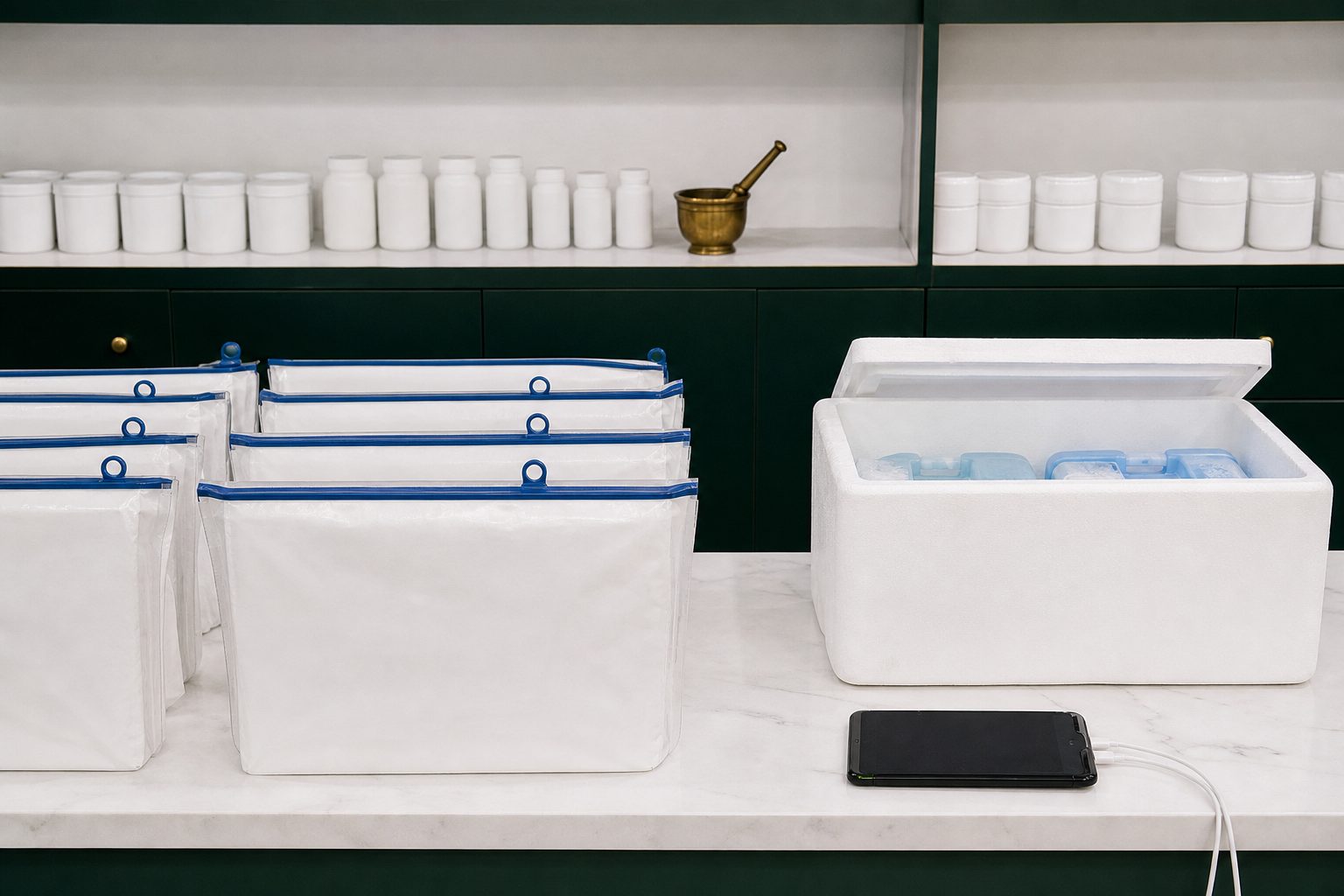
Cold chain integrity is mission critical for some therapies. Insulin, certain injectables, and eye drops must stay in a refrigerated range from pharmacy to doorstep. The first step is selecting the correct insulated bag or tote for each order. Not all coolers are equal, use solutions rated for pharmacy-grade cold chain, and avoid generic lunch totes for anything temperature sensitive.
Pack the medication in its original container with enough gel packs to maintain temperature for the expected duration. As a rule of thumb, the number and size of gel packs should be based on trip length, outside temperature, and load density. If using reusable packs, confirm they are fully frozen before loading. Avoid overfilling the tote, since tight packing can block airflow and cause uneven cooling.
Cold chain items should be the last loaded onto the van to limit time out of the fridge. Place them in an accessible spot near the van door to minimize exposure during each stop. Mark the tote clearly, both to prevent accidental rough handling and to alert the driver to prompt delivery. Do not bury refrigerated items under non-refrigerated totes or paper bags.
At staging, verify that every cold item is logged on the manifest as requiring chilled transport. A quick probe with an infrared thermometer can serve as a last check before sealing the tote. Missed cold chain steps can mean spoiled meds and insurance claims, so this is not a corner to cut.
Controlled substances: manifest, separation and chain of custody
Controlled substances bring an extra tier of accountability and regulation to every delivery shift. Each controlled prescription must be recorded on a separate manifest that travels with the driver. This manifest lists the patient, address, prescription number, drug and quantity, and must be signed out by the driver when leaving the pharmacy.
Physical separation is best practice. Place controlled medications in a dedicated, lockable container, never mixed with routine prescriptions. If the route includes both controlled and non-controlled deliveries, these items should be the last loaded and first delivered to minimize their time in transit. For multi-stop routes, keep the container in a secured part of the vehicle and out of plain sight.
Chain of custody matters. Every handoff, from pharmacist to driver to patient, must be documented. The driver should sign for the controlled substance manifest at pickup. Upon delivery, the patient or their authorized recipient must provide a signature that matches the manifest and a valid ID, if state law requires it. If delivery cannot be completed, the drug returns to the pharmacy and the return is logged.
Records for controlled deliveries should be reviewed at the end of each shift, with discrepancies investigated immediately. Auditors and inspectors look for gaps in the log, missing signatures, or unaccounted returns. A clear, step-by-step chain of custody is the best insurance against loss, diversion, or regulatory action.
Keep reading: PBM Reform, NADAC Pricing and Where Reimbursement Is Headed
Copay, card on file and what the driver is allowed to accept
Copay collection sets independent pharmacy apart from mail order and big box chains. But field collection brings risk and confusion if policies are unclear. Before departure, confirm every delivery's payment status. The manifest should show whether copay is due, if a card is on file, or if the patient is enrolled in a zero-copay program.
Drivers need clear guidance on what forms of payment they can accept. Many pharmacies allow cash or checks, but some restrict drivers to non-cash collection for security. If the pharmacy uses a mobile card reader, verify it is charged and functioning before the route begins. For cash payments, require exact change whenever possible and issue a dated, signed receipt at handoff.
If the pharmacy keeps cards on file, all pre-authorizations should be run before the driver leaves. Never ask a driver to write down card details in the field. When a patient's payment fails or is missing, staff should decide before the van rolls whether to hold the delivery, call ahead, or make other arrangements. Avoid putting drivers in the position of negotiating payments at the door.
Policies around copay waivers, discounts, or payment plans must be written and consistently applied. The driver's manifest should make clear what is expected at each stop, and a point of contact at the pharmacy should be available for questions about unclear payment situations.
Counseling offer documented and the pharmacist callback flagged
Federal law and most state regulations require that pharmacies offer counseling for every new prescription, and for refills when requested. When delivering, this offer must still be made, even if the interaction is not face to face. The pre-route check should confirm that each patient has been offered counseling and that the response is documented.
For routine refills where the patient has declined counseling previously, document the standing refusal in the profile. For new prescriptions, a staff member should call before delivery to offer counseling, or include a printed statement with the delivery. The driver should have a way to flag the need for pharmacist contact if the patient requests it at the door, such as a checkbox on a delivery app or a note on the manifest.
Missed counseling offers are a frequent cause of minor regulatory citations. Confirm that staff have printed or digital records of every offer and response. If a patient asks for a callback, flag this before the route starts so the pharmacist can prioritize the call and ensure follow-up the same day.
For patients with language barriers or hearing difficulties, prepare translated counseling materials or plan for a follow-up call using interpreter services. Document these accommodations before the van leaves.
See how PillRoute handles this for independent pharmacy
Addresses, gate codes, apartment numbers and access notes
Efficient delivery depends on more than a ZIP code. Each address needs to be checked for completeness, including apartment or suite numbers, gate codes, and any special access instructions. The manifest, whether paper or digital, should list all details needed for the driver to reach the patient's door without delay.
Before the van leaves, verify that every stop includes all known access instructions. If a building is behind a locked gate or requires a call box code, confirm that the latest information is recorded. In many cases, missing an apartment number means an undeliverable package and a return trip.
For new patients or first time deliveries, call ahead to confirm directions and ask about potential obstacles such as dogs, parking restrictions, or language barriers. Add any notes to the manifest for future reference. For regular routes to senior care facilities or clinics, double check delivery windows and sign-in requirements at the front desk.
GPS can be helpful, but it is not a substitute for local knowledge. Encourage drivers to update the route notes with any changes or new access challenges found during previous runs. Well-maintained notes on hard-to-find homes or tricky apartment complexes save time and frustration.
Signature device charged, updated and able to work offline
Signature capture is the legal proof that a delivery occurred. Whether using a dedicated handheld device, a tablet, or a phone app, the device must be ready before the van leaves. Confirm the battery is fully charged and a backup charger is in the vehicle.
Check that the signature app or software is updated to the latest version. Outdated apps can glitch, freeze, or fail to sync properly. Before departure, run a quick test capture and confirm that signatures are being stored locally if cell service is lost. Many delivery management tools support offline capture, syncing later when the driver returns to coverage.
Drivers need to know how to troubleshoot common issues, such as unresponsive screens or full storage. If the device requires login credentials, verify they are current and accessible. For controlled substance deliveries, confirm the device can record both recipient signature and, if state law requires, a photo of ID. If a paper backup is needed, have blank signature sheets ready.
In rural or low-signal areas, plan ahead. Offline mode should be tested during route staging, and any missed captures noted for follow-up. Devices should be cleaned and disinfected between runs, especially when serving vulnerable populations.
The return trip: undelivered items, collected payments and paperwork
Every delivery run ends with a reconciliation. Undelivered prescriptions, especially controlled substances or refrigerated items, must be logged and returned to the pharmacy immediately. Document the reason for non-delivery, whether it was a wrong address, patient not home, or refusal at the door. The manifest should show the status of every item at the end of the route.
Collected payments, especially cash, should be counted and signed in on return. Use a locked bag or envelope for cash and checks. The driver and a second staff member should verify the total and sign off on the count. For card payments, check that all transactions are settled and receipts attached to the manifest.
Paperwork matters. Return all signed manifests, delivery confirmations, and any notes about patient interactions or counseling requests. For undelivered controlled substances, the chain of custody log must be completed, showing return to pharmacy stock. Refrigerated items go straight back to cold storage with a temperature check.
After reconciling the run, update the patient profile with any changes, such as new gate codes or standing instructions for next time. Missed deliveries should be flagged for call-back and rescheduling. Regular review of completed and failed deliveries helps spot process gaps and keeps route efficiency high.
Most independent pharmacies now rely on a delivery management tool to streamline these checks. Systems that combine medication synchronization, route building, signature capture, and refill call management can turn a scattered checklist into a single, repeatable workflow. The right software keeps your pharmacy compliant, efficient, and focused on patient care.