7:40 a.m.: staging the totes and reading the route sheet
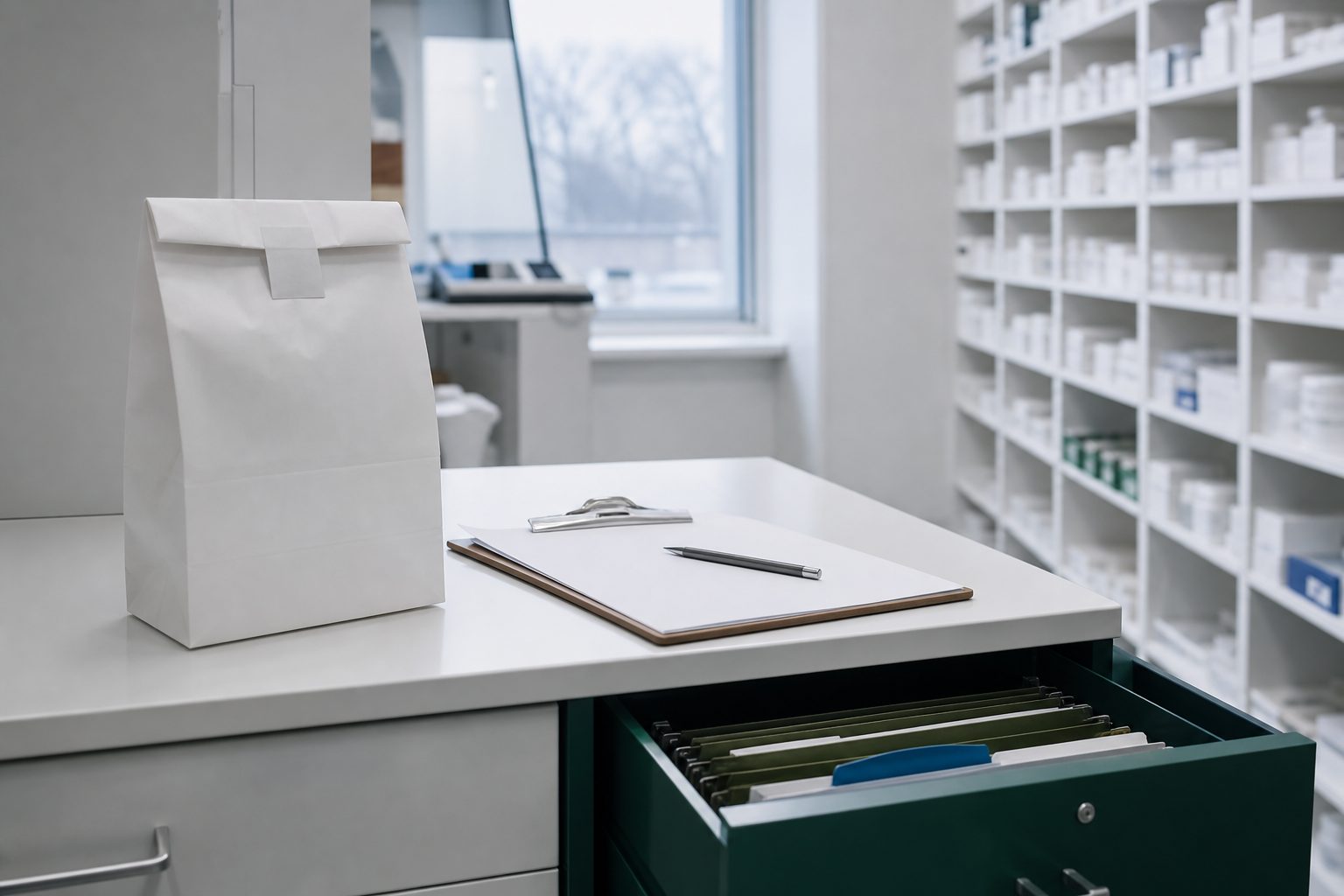
The store lights click on just after 7:30. The pharmacist, already checking the fax line for overnight orders, nods to the first delivery driver hustling through the side door. Today's run will cover sixty miles round-trip on county roads that have seen more salt than sun in the past week. The driver's first job is staging: each insulated tote, labeled with a route sticker, gets loaded in the front section. The rest get packed into the rear cargo area, grouped by township and delivery sequence.
The route sheet sits on the counter, printed from the store's system. It lists today's stops in order, patient names, special instructions, and any medications marked as high-alert or requiring a signature. Some addresses have a star, those are new starts or people who sometimes do not answer the door. The pharmacist points out two patients who need extra time: one is hard of hearing, the other might not be home until after 11. The sheet also flags two refrigerated items and a controlled substance that will need a witnessed signature. The driver checks the weather: fifteen degrees, light flurries, wind out of the north.
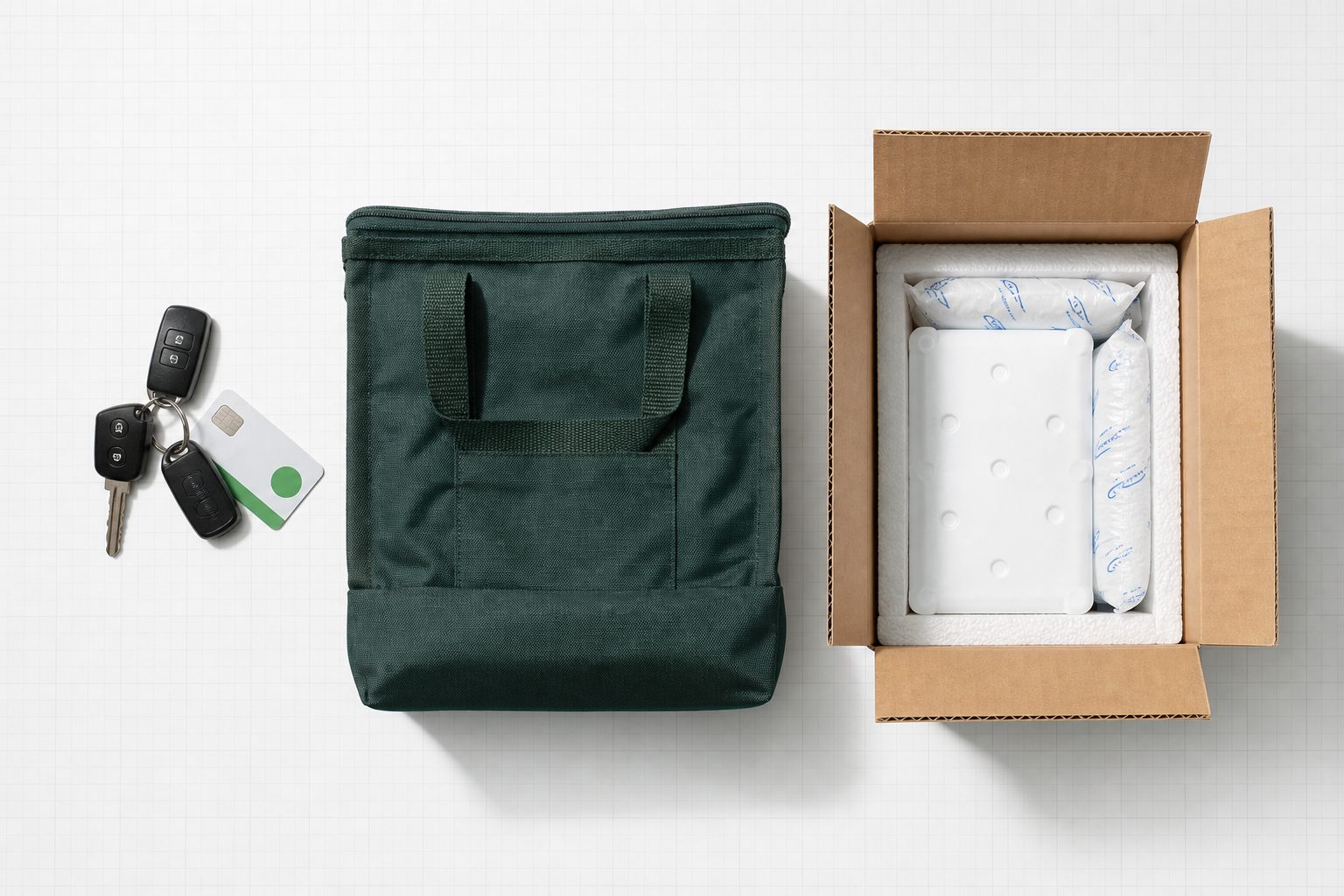
The prescription bags are sorted into the totes, labels facing out. The refrigerated meds, mostly insulins, go in a cooler with two gel packs. The controlled substance is double-bagged and rubber-banded with the signature pad. The driver carries a backup paper log, just in case.
Keep reading: How to Build a Med Sync Program in an Independent Pharmacy
The cooler in the footwell and the first refrigerated stop
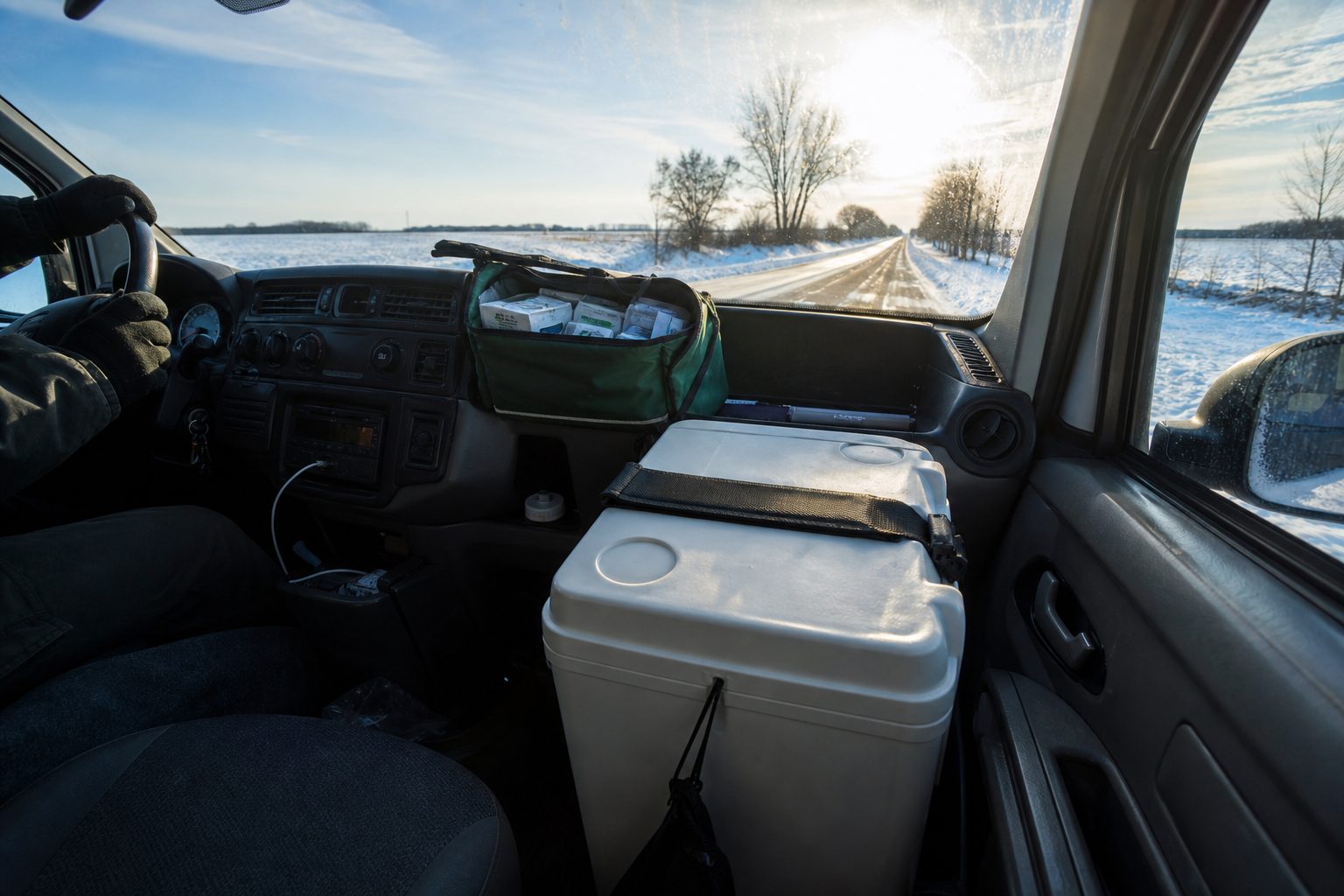
The van warms up for several minutes before the driver pulls out, but the cooler stays cold. It sits upright in the passenger-side footwell, as close to the heater vent as possible without blocking it. Insulin cannot freeze, but it cannot get warm either. The driver checks the digital thermometer inside the cooler: thirty-seven degrees. The gel packs are still firm.
The first stop is eight miles out, an older man who gets weekly syringes and insulin pens. He is on a fixed schedule. The delivery window is tight, as he likes to eat breakfast at nine. The driver parks on a plowed gravel driveway, grabs the cooler, and knocks. The patient's daughter answers. She checks the vials, signs on the pad, and asks about a flu shot for next week. The driver makes a note on the route sheet and tucks the cooler back in the van, watching that the lid snaps tight. There are three more cold-chain stops to go before noon.
A controlled substance delivery and the signature it requires
Controlled substances require more than a drop-and-go. The route sheet has the patient's name and a big "ID" note. The driver calls ahead, as the store requests, to confirm the patient is home and remind them to have identification ready. This stop is at a yellow farmhouse with a long, icy walk from the road.
On arrival, the driver grabs the package and the signature pad, then double-checks the lock on the van. The patient meets them at the door. The driver checks the ID, records the number, and hands over the medication only after logging the signature. The signature pad lags in the cold. The driver rubs it between their hands to warm it up before it will register a mark. The process takes several minutes, but it is required for the audit trail. The driver notes the time and initials the paper backup, just in case the electronic one did not go through. The patient is grateful. She says getting to town would mean missing a meal and risking a fall.
Keep reading: Pharmacy Delivery Rules: DEA, HIPAA and State Board Requirements
The house that is not home, and what happens to the bag
Occasionally, a stop comes up empty. The driver pulls up to a ranch house where a patient typically waits by the window. Today, the driveway is empty and the shades are drawn. The driver tries the doorbell, then calls the listed number. No answer. A neighbor's dog watches from across the fence.
Policy says not to leave medication unless the patient or an authorized contact is present. The bag goes back in the tote, and the driver notes the attempt on both the route sheet and the electronic log. If the medication is time-sensitive, the store staff will call the patient once the driver checks in at the next stop with cell service. More than once, the patient has called in later, asking for a second run or agreeing to pick up at the pharmacy. The undelivered bag stays in the locked tote, tagged with the reason it was not delivered and the time.
Midday reroute: a hospital discharge call changes the order of stops
Mid-morning, the driver's phone buzzes. The pharmacy counter is calling: a patient is being discharged from the local hospital. The new prescription is urgent, antibiotics that need to be started today. The address is on the far side of the county, well off the original route plan.
The driver pulls over to review the route. The delivery sheet goes on the dash, and the new stop is penciled in between two others that are nearby. The driver calls the patient's caregiver to confirm someone will be home. The hospital discharge means the driver will double back on a few roads and push lunch later than planned. The pharmacy faxes the new prescription and confirms it is ready. The driver swings by the store to pick it up, stacking it in the tote with a sticky note to remind them of the change. The entire route shifts by about forty minutes, but the driver knows these last-minute detours are part of the job.
Most days, a reroute means reshuffling the order of stops, updating the call queue, and making sure time-sensitive meds get delivered before the window closes. The driver relies on the printed route sheet, a paper map in the glove box, and a smartphone app when there is service. Sometimes, the patient's home is not yet in the GPS database, and the driver asks for landmarks: a red barn, a mailbox shaped like a fish, the road that turns to dirt by the old schoolhouse.
See how PillRoute handles this for independent pharmacy
Back roads, dead cell service and capturing signatures offline
The sun comes out briefly as the van climbs through the wooded hills. Cell service drops out for miles at a time. The driver keeps a mental tally of which hollows and ridges are dead zones. For signature capture, the tablet switches to offline mode, storing the digital signatures for upload when the van is back in range. The driver checks the battery, cold weather drains it fast. A spare charger stays in the cup holder, and the backup paper log gets more use in January than July.
One stop requires a signature from an adult child who meets the driver at the end of a long private lane. The driver hands over the pad, but the screen lags. The patient's son signs with a stylus, but his signature appears as a squiggle. The driver asks for a second try, then records initials on the paper log as a backup. Once back on the main road, the device reconnects and syncs the signatures. If the upload fails, the driver calls the store to confirm the drop and notes the issue for the pharmacist to review at end of day.
Some patients request a call ahead because cell service is spotty at their homes. The driver calls from the top of the ridge before descending to the valley. Sometimes, the delivery is handed through a storm door or left at a trusted neighbor's porch if the patient's family has pre-authorized it. The driver double-checks the route sheet for any special instructions, as mistakes here mean extra miles and an unhappy customer.
3:50 p.m.: back at the store for reconciliation and tomorrow's list
The last delivery goes out just before 3:30. The driver returns to the pharmacy by 3:50, tucking the van into a tight spot out back. Inside, the first job is reconciliation. The delivered bags are checked off against the route sheet, each signature pad is plugged in, and any undelivered meds are logged for follow-up. The cooler is unpacked and wiped down, the gel packs go back in the freezer, and the paper log is matched with the electronic record to ensure nothing is missed.
The pharmacist reviews the day's exceptions: missed deliveries, unreadable signatures, or any notes about new patients and urgent requests. The driver restocks the van with water bottles, sanitizing wipes, and extra pens. Tomorrow's list is already printing, each day brings new addresses, new weather, and a different set of challenges to getting medication where it is needed, on time and in compliance.
Tools that handle medication synchronization, route building, signature capture, and refill call queues can help streamline days like this. For stores that want to keep their drivers on schedule and paperwork in order, these systems take some of the friction out of the process, no matter how cold the county roads get.